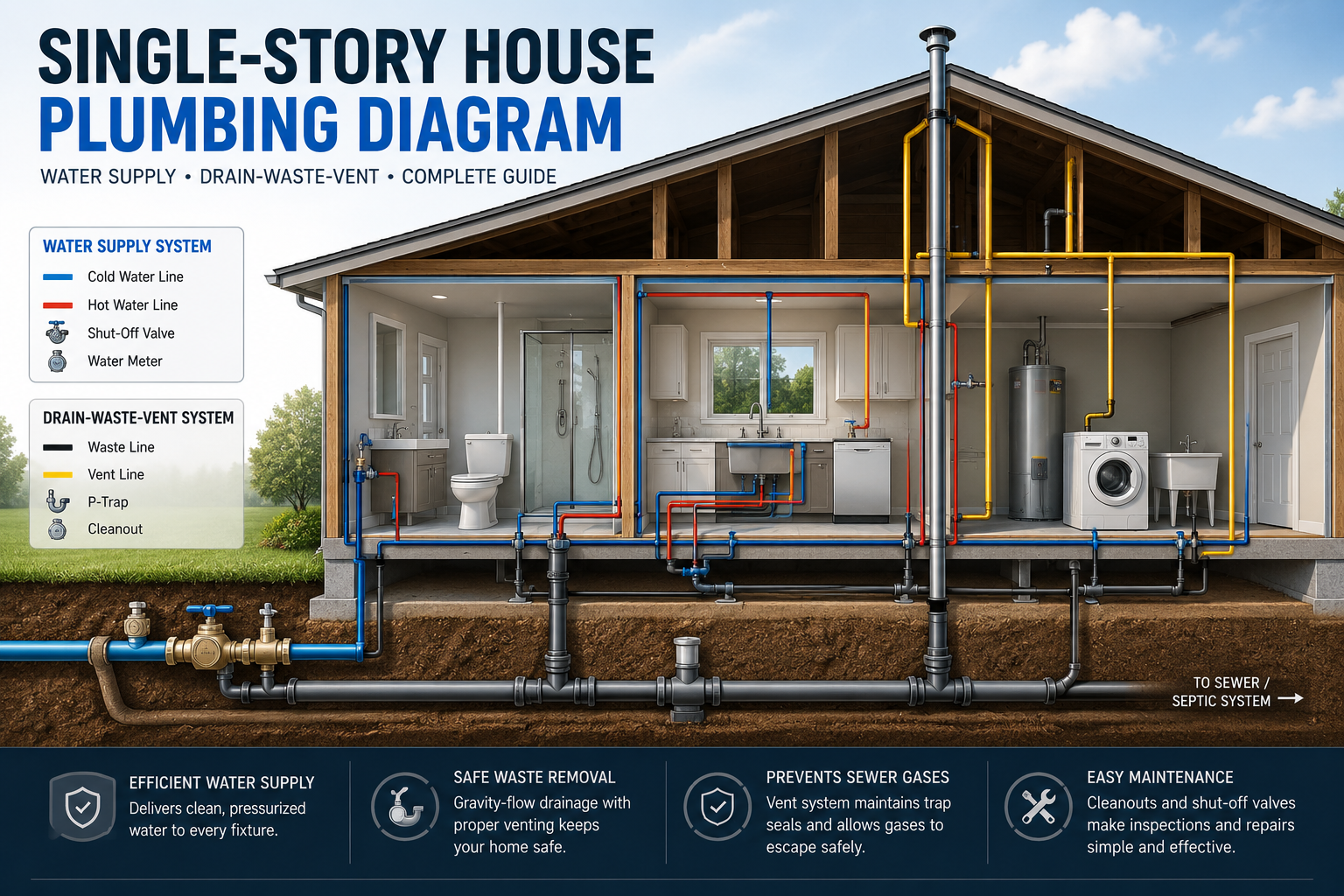

Plumbing affects almost every part of daily life, from the water we use for drinking and bathing to the systems that remove wastewater from our homes. Many plumbing problems also begin with small warning signs that homeowners may overlook.
These interesting plumbing facts can help you understand how residential plumbing works, recognize common problems, conserve water, and know when a plumbing issue may require professional attention.
Water Conservation Plumbing Facts
1. Small leaks can waste thousands of gallons of water
A dripping faucet or leaking fixture may not seem like a major problem, but even a small leak can waste a substantial amount of water over time. Fixing dripping faucets, leaking toilets, and other plumbing leaks can help reduce unnecessary water consumption and prevent higher water bills.
2. Modern toilets use significantly less water than older models
Older toilets were designed to use considerably more water per flush than many modern high-efficiency models. Replacing an outdated toilet with a water-efficient model can reduce household water consumption while maintaining effective flushing performance.
3. A running toilet can waste a surprising amount of water
A toilet that continues to run after flushing may have a worn flapper, faulty fill valve, or another internal problem. Depending on the severity of the leak, a running toilet can waste a significant amount of water every day.
If your toilet seems to run intermittently or you hear water moving when nobody is using it, it is worth investigating.
4. Water-efficient fixtures can reduce household water consumption
Low-flow showerheads, efficient faucets, and modern toilets are designed to provide the necessary performance while using less water. Replacing older fixtures can be one practical way to improve water efficiency throughout a home.
5. A sudden increase in your water bill can indicate a plumbing leak
If your household’s water usage has not changed but your water bill suddenly increases, a hidden plumbing leak could be one possible explanation. Leaks may occur inside walls, beneath floors, around toilets, or in underground plumbing lines.
A professional inspection can help identify the source when the location of the leak is not obvious.
Interesting Facts About Household Plumbing
6. Your water heater is an important part of your home’s energy use
Heating water requires energy, which makes the water heater an important consideration when homeowners are looking for ways to improve efficiency. The type of water heater, household usage, maintenance, and energy source can all affect operating costs.
Modern options include high-efficiency systems, heat pump water heaters, and smart water-heating technology.
7. Water heaters do not last forever
The service life of a water heater depends on its type, installation, water quality, maintenance, and usage. As a water heater gets older, problems such as leaks, inconsistent water temperature, unusual noises, corrosion, or insufficient hot water may indicate that repair or replacement should be considered.
8. Most plumbing problems do not start as major emergencies
Many serious plumbing problems begin with relatively small warning signs. A slow drain, dripping faucet, running toilet, low water pressure, unusual odor, or minor leak can indicate an underlying issue.
Addressing these problems early may help prevent more expensive repairs later.
9. Water pressure that suddenly changes can indicate a plumbing problem
A sudden decrease or increase in water pressure may be caused by several issues, including a partially closed valve, clogged pipes, damaged plumbing components, or problems with the property’s water supply.
Persistent pressure problems should be investigated rather than ignored.
10. Plumbing systems need regular maintenance
Plumbing systems are often out of sight, but they still require attention. Checking faucets, toilets, water heaters, drains, exposed pipes, and shutoff valves periodically can help homeowners identify developing problems before they become emergencies.
Interesting Facts About Drains and Sewer Lines
11. Grease should not be poured down the drain
Liquid grease may appear harmless when it is hot, but it can cool and solidify inside plumbing pipes. Over time, grease buildup can contribute to slow drains and stubborn blockages.
Instead of pouring grease into a sink, allow it to cool and dispose of it properly.
12. Not everything that is labeled “flushable” belongs in the toilet
Toilets are designed primarily for human waste and toilet paper. Many wipes, paper products, hygiene products, and other materials can cause blockages even when their packaging suggests that they are flushable.
Flushing inappropriate materials can contribute to clogged toilets and sewer-line problems.
13. Tree roots can damage underground sewer lines
Trees and large plants naturally seek sources of water, and roots can sometimes enter small cracks or damaged joints in underground sewer pipes. Once inside, roots can grow and contribute to recurring blockages.
Repeated sewer backups or slow drains may require a professional sewer inspection to determine whether roots or damaged pipes are involved.
14. Hydro jetting can remove stubborn buildup from some plumbing lines
Hydro jetting uses highly pressurized water to clean certain types of buildup and debris from plumbing pipes. Depending on the condition and material of the plumbing system, professional hydro jetting may be an effective option for stubborn or recurring drain problems.
A plumber should evaluate the condition of the pipes before recommending this method.
15. A sewer camera can help locate hidden plumbing problems
A sewer or plumbing camera inspection allows a professional to see inside certain pipes without immediately excavating the plumbing system. Camera inspections can help identify issues such as blockages, cracks, root intrusion, corrosion, or other abnormalities.
This can be particularly useful when a property experiences recurring drain or sewer problems.
Plumbing Facts That Can Help Homeowners Save Money
16. A hidden leak can exist even when there is no visible water
Not every plumbing leak produces an obvious puddle. Water can leak behind walls, beneath floors, under cabinets, or underground.
Warning signs may include unexplained water-bill increases, damp areas, musty odors, peeling paint, water stains, or sounds of running water when fixtures are not being used.
17. Preventive plumbing maintenance can help reduce emergency repairs
Regular maintenance does not guarantee that a plumbing emergency will never occur, but it can help identify worn components and developing problems earlier.
Simple checks can include looking for leaks, testing shutoff valves, checking water heater connections, and paying attention to changes in drainage and water pressure.
18. A slow drain should not always be treated with chemical drain cleaner
Chemical drain cleaners may provide a temporary solution for certain clogs, but they are not appropriate for every plumbing system or blockage. Repeated use may also create additional concerns depending on the product and condition of the pipes.
Persistent or recurring clogs are better evaluated to determine the underlying cause.
19. The location of a clog can help identify the problem
A blockage affecting one sink may have a different cause from a problem affecting several fixtures at the same time. When multiple drains begin backing up or draining slowly, the issue may involve a larger section of the plumbing or sewer system.
Understanding this distinction can help determine whether a simple fixture-level repair or professional drain inspection is needed.
20. Water-saving plumbing upgrades can benefit more than the environment
Efficient fixtures and plumbing equipment can reduce water consumption. Depending on local utility rates and household usage, reducing unnecessary water use may also help lower water-related expenses.
The best upgrades depend on the age of the plumbing system, household needs, available products, and local conditions.
More Surprising Plumbing Facts
21. Your home’s plumbing has multiple shutoff points
A home typically has individual shutoff valves for certain fixtures and appliances, along with a main water shutoff that can stop water entering the property.
Knowing where these valves are located can be extremely useful during a plumbing emergency.
22. Water stains should not automatically be dismissed as cosmetic
A brown, yellow, or discolored stain on a ceiling, wall, or cabinet may be evidence of a previous or ongoing water leak. Painting over the stain without identifying the source can allow an underlying plumbing problem to continue.
23. Strange plumbing odors can be a warning sign
Unusual smells coming from drains, sinks, or plumbing fixtures may have several possible causes. Dry traps, buildup, sewer-gas issues, or drainage problems can all require different solutions.
Persistent sewer-like odors should be professionally evaluated.
24. Older homes can have very different plumbing systems
The age and construction of a property can affect its plumbing materials, pipe configuration, fixtures, drainage system, and previous repairs. Older plumbing may require different maintenance or repair approaches than newer installations.
Before making significant plumbing changes, it can be useful to understand what type of pipes and fixtures are already installed.
25. Good plumbing habits can prevent many common problems
Simple habits can make a significant difference. Avoid flushing inappropriate materials, never pour grease into drains, address leaks promptly, avoid ignoring recurring clogs, and schedule professional service when a problem continues after basic troubleshooting.
Small maintenance decisions can help protect the plumbing system and reduce the likelihood of unexpected repairs.
Plumbing Facts Every Homeowner Should Remember
The most useful plumbing facts are not just interesting—they can help homeowners recognize problems before they become expensive emergencies. A dripping faucet, running toilet, slow drain, unusual odor, unexplained water-bill increase, or water stain can all deserve attention.
Regular maintenance, efficient fixtures, responsible water use, and timely professional repairs can help keep a home’s plumbing system operating properly.
If you are experiencing persistent drain problems, suspected leaks, water heater issues, low water pressure, or another plumbing concern, A to Z Statewide Plumbing can help identify the problem and recommend an appropriate solution.
Call A to Z Statewide Plumbing at 1-800-930-1123 for residential and commercial plumbing assistance.